Updated: July 2026
A Step-by-Step Guide to Calculating ROI on Your Canggu Rental Villa
Canggu Luxury Homes is a curated Indonesia luxury tourism experience offered by Canggu Luxury Homes: handpicked routes, vetted operators, transparent pricing, and 24/7 concierge support across Indonesia.
- What makes Canggu Luxury Homes a premium experience.
- How Canggu Luxury Homes curates exclusive access and concierge logistics.
- Routes, seasons, and pricing transparency — no hidden fees.
A Step-by-Step Guide to Calculating ROI on Your Canggu Rental Villa
Investing in the Bali property market, which saw over 5.2 million international tourist arrivals in 2023, offers a compelling blend of lifestyle and financial return. Yet, beneath the allure of tropical living lies the necessity of rigorous financial analysis. For those considering premium Canggu luxury homes, where land values have appreciated by over 15% annually in recent years, moving beyond idyllic visions to a data-driven evaluation is paramount. This guide provides a clear framework for calculating the potential Return on Investment (ROI), ensuring your decision is as strategically sound as it is personally rewarding. Indonesia travel guide
Understanding the Core Metrics of Villa ROI
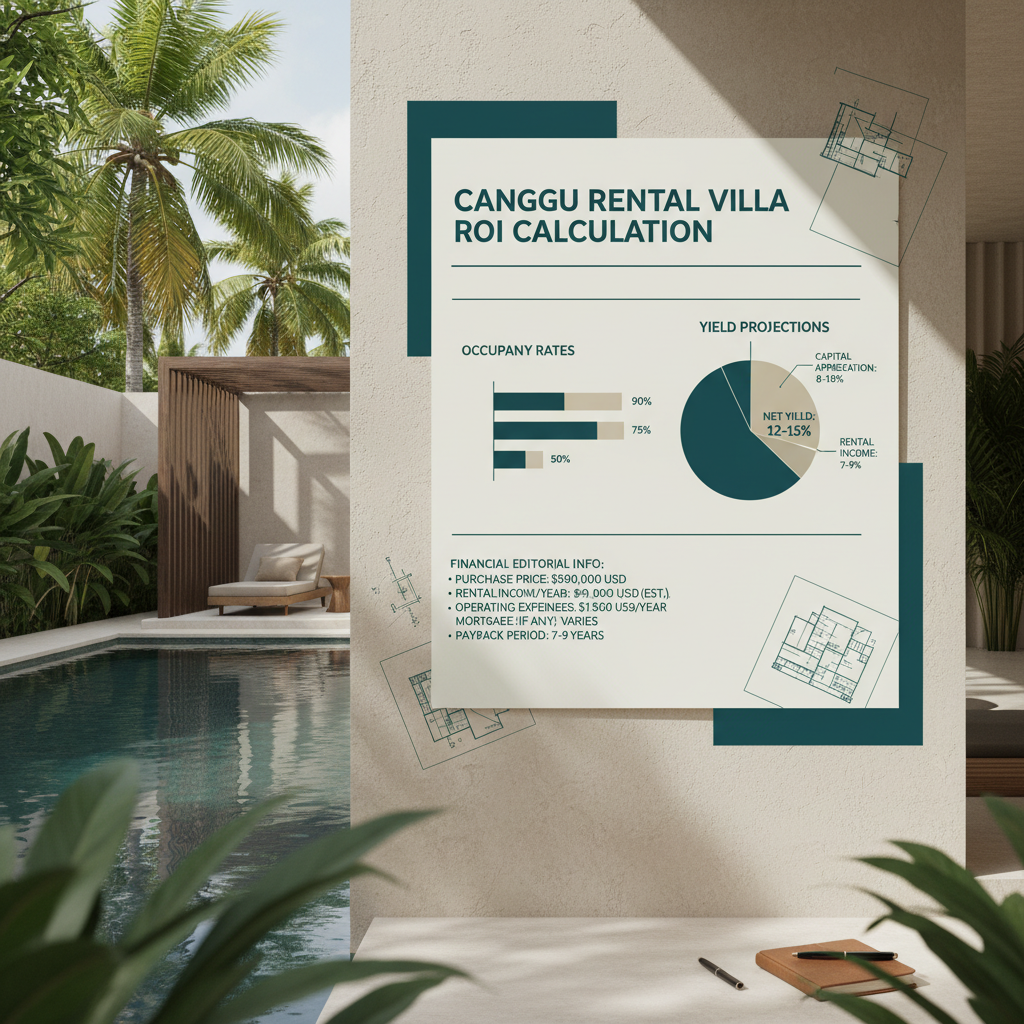
Before delving into calculations, it is essential to grasp the fundamental metrics that govern property investment performance. The most critical is Return on Investment (ROI), a percentage that measures profitability relative to cost, with many Canggu villas targeting an annual ROI of 8-12%. However, to arrive at an accurate ROI, we must first determine two other key figures: Net Operating Income (NOI) and the Capitalisation Rate (Cap Rate), which for prime Berawa properties often falls within a 7-9% range. Indonesia on Wikipedia
NOI represents total income after subtracting all operating expenses, but before accounting for debt service and income taxes, such as the 20% final tax on rental income for non-resident owners. The Cap Rate, calculated by dividing the NOI by the property’s market value, offers a snapshot of its unleveraged return. For example, a villa with a 7% Cap Rate is generating more income relative to its price than a comparable one with a 5% Cap Rate. These figures strip away financing variables to reveal the raw performance of the asset itself.
Step 1: Calculating Your Gross Rental Income
Your first task is to project the total potential income your villa can generate annually. This is not a simple case of multiplying a nightly rate, which can fluctuate from $350 to over $900 for a luxury three-bedroom, by 365 days. A realistic forecast requires a nuanced understanding of Canggu’s unique tourism rhythms, which see demand shift dramatically over the year. You must consider several dynamic factors, such as the roughly 90-day peak season, to build an accurate picture.
Occupancy Rates and Seasonality
Canggu experiences distinct high and low seasons. The peak periods, from June to August and during the December-January holidays, see occupancy rates soar to 80-95% for well-managed properties. Conversely, the rainy season from January to March, particularly after the Nyepi holiday, may see rates dip to as low as 40-50%. Factoring in these fluctuations, a conservative, blended annual occupancy rate of 65-75% is a prudent starting point for a high-quality villa in your forecast.
Variable Nightly Rates
Your pricing strategy must reflect this seasonality. A four-bedroom villa in Berawa, located just 1.5 kilometers from Finns Beach Club, might command a premium $1,200 nightly rate in August, which you would need to adjust downwards to perhaps $750 in quieter months like April. In contrast, a two-bedroom property with rice paddy views in Babakan might have a more stable rate but a different target clientele. Analyse comparable properties on platforms like Airbnb to establish realistic high, shoulder, and low season rates for your calculation.
Step 2: Itemising Your Operating Expenses
This is where diligence is most critical, as underestimating expenses is a common pitfall for new investors. A comprehensive list of outgoings is necessary to understand the true cost of operating Canggu luxury homes. These include villa staff salaries (approx. IDR 4,000,000/month per person), pool and garden maintenance (IDR 1,500,000/month), and high-speed internet (IDR 750,000/month). These consistent costs must be factored into your annual budget to avoid surprises.
Your list of expenses should include:
- Villa Management Fees: Professional management companies typically charge between 15-25% of gross rental revenue. This fee covers marketing, guest communications, check-ins, and general operational oversight.
- Staff Salaries: This includes your `pembantu` (housekeeper), pool and garden maintenance staff, and potentially security. These are essential for maintaining a luxury standard.
- Utilities and Subscriptions: Account for `listrik` (electricity), high-speed internet from providers like Biznet, waste collection (`sampah`), and monthly `Banjar` (local community) fees.
- Maintenance and Repairs: Prudent investors allocate 5-10% of gross income to a maintenance fund. Bali’s tropical climate necessitates regular upkeep, from servicing air conditioning units to addressing issues that arise during the rainy season.
- Marketing and Platform Fees: Online travel agencies like Airbnb and Booking.com charge service fees on every booking, which must be deducted from your gross income.
- Taxes and Licensing: Indonesian law requires the payment of PPh (income tax) on rental income. You will also need to account for the costs associated with obtaining and renewing a `Pondok Wisata` (rental license).
Step 3: Calculating Net Operating Income (NOI) and Cash Flow
With your income and expense projections in hand, calculating your NOI is straightforward. The formula is Gross Rental Income – Total Operating Expenses = Net Operating Income. For instance, if your villa generates a gross rental income of $95,000 USD for the year and your total operating expenses, including management fees and maintenance, amount to $28,500 USD, your NOI would be $66,500 USD. This figure represents the property’s profitability before financing and is the purest measure of the asset’s performance.
For example, if your villa generates £100,000 in gross rental income and has £40,000 in total operating expenses, your NOI is £60,000. This gives you a clear indication of the villa’s earning power.
To determine your final cash flow, you must then subtract your annual debt service (total mortgage or loan payments for the year). If your annual debt service is £35,000, your pre-tax cash flow would be £25,000 (£60,000 NOI – £35,000 Debt Service). A positive cash flow is the primary objective for investors focused on generating passive income.
Step 4: Factoring in Capital Appreciation
While cash flow provides your annual return, the second component of your total ROI is capital appreciation—the increase in the property’s value over time. Canggu, particularly in prime zones like Pererenan and Berawa, has experienced significant land value appreciation over the past decade. This growth is driven by sustained international demand, improving infrastructure, and the area’s undeniable global appeal.
Appreciation is a long-term benefit, realised only when you sell or refinance the property. While it is more speculative than operational income, it is a powerful factor in the overall investment thesis for Canggu luxury homes. For properties held on long leasehold (25+ years) or a rare freehold title, this capital growth can often surpass the cumulative rental income over the life of the investment, delivering a substantial final return.
Frequently Asked Questions About Canggu Villa ROI
What is a good ROI for a Canggu rental villa?
A good net rental ROI (based on cash flow) for a well-managed villa in Canggu typically ranges from 6% to 12% annually. This does not include capital appreciation, which can significantly increase the total return over the long term. The final figure depends heavily on purchase price, location, and operational efficiency. A prime property in Berawa may have a lower cash flow ROI but higher appreciation potential than one further inland.
How do leasehold and freehold titles affect ROI?
Leasehold properties generally have a lower entry cost, which can lead to a higher annual cash flow ROI. However, the asset’s value diminishes as the lease term shortens. Freehold properties, while more expensive and complex for foreigners to structure ownership, offer the significant advantage of perpetual ownership and the full benefit of long-term capital appreciation, potentially delivering a higher total ROI upon sale.
Are occupancy rates in Canggu consistent year-round?
No, occupancy is highly seasonal. Peak seasons are June-August and the Christmas/New Year period, with rates often exceeding 85%. The shoulder seasons (April-May, September-October) are also strong. The lowest occupancy typically occurs during the rainy season, particularly from January to March (excluding holidays). A successful rental strategy involves dynamic pricing to maximise revenue across these different periods.
What are the biggest hidden costs of owning a villa in Bali?
The most commonly underestimated costs are preventative maintenance and staff-related expenses. The tropical climate demands constant upkeep of pools, air conditioners, and building materials. Additionally, budgeting for staff severance (as required by Indonesian law), annual bonuses (`THR`), and health insurance is crucial for maintaining a happy, reliable team and avoiding unexpected financial burdens.
How much should I budget for annual maintenance?
A prudent rule of thumb is to set aside 5-10% of your gross annual rental income for maintenance and repairs. This fund covers routine servicing of equipment like water pumps and AC units, as well as unexpected issues such as roof leaks during a storm or plumbing problems. For older properties, budgeting closer to the 10% mark is advisable.
Is it better to manage the villa myself or hire a company?
For overseas investors, hiring a professional management company is almost always the superior choice. They handle marketing, bookings, guest relations, staff management, and maintenance, which is incredibly difficult to do remotely. While their fee (15-25%) impacts your net income, their expertise often leads to higher occupancy and nightly rates, offsetting the cost and ensuring a passive investment.
What taxes apply to rental income in Indonesia?
Rental income generated from an Indonesian property is subject to a final income tax (PPh Final). For non-resident taxpayers, the rate is typically 20% of the gross rental income. For resident taxpayers (with an NPWP/tax ID number), the rate is 10%. It is imperative to consult with a local tax advisor to ensure full compliance with Indonesian regulations.
Does proximity to the beach significantly impact rental rates?
Yes, immensely. Villas within walking or a short scooter distance to popular beaches like Echo Beach, Batu Bolong, or Berawa Beach command the highest nightly rates and occupancy. This “prime” location factor is one of the strongest drivers of both rental income and capital appreciation. A property’s value and rental potential often decrease noticeably with every 500 metres one moves inland from the coastline.
How does a ‘Pondok Wisata’ license affect my rental potential?
A Pondok Wisata (or the newer PBG/SLF equivalent) is the legal license required to operate a property as a short-term rental. Operating without one is illegal and carries significant risks, including fines and operational shutdowns. Having the correct license is non-negotiable; it legitimises your business, allows you to list on major platforms without issue, and is a prerequisite for any serious investment.
What is the difference in investment potential between Berawa and Pererenan?
Berawa is a highly developed, energetic hub with top-tier beach clubs, restaurants, and international schools. It offers very high and stable rental demand but at a higher entry price. Pererenan, its neighbour, has a more relaxed, bohemian-chic vibe with a protected green belt. It is currently in a high-growth phase, offering potentially greater capital appreciation, though its rental market is slightly less established than Berawa’s.
How long does a typical leasehold last in Canggu?
New leasehold agreements are typically offered for periods of 25 to 35 years. It is common for these leases to include a guaranteed option to extend for an additional term (e.g., another 20-25 years) at a price determined by the market value of the land at the time of extension. This provides long-term security for the investor.
Can foreigners legally own property to generate rental income?
Yes. Foreigners can legally and securely control property and generate rental income through a long-term leasehold agreement (`Hak Sewa`) or by establishing a foreign-owned company in Indonesia (a `PT PMA`), which can then acquire a `Hak Guna Bangunan` (Right to Build) title. Both methods are well-established legal frameworks for foreign property investment in Bali.
Beyond the Numbers: Your Partner in Canggu
Calculating ROI is a crucial exercise in diligence, transforming an emotional purchase into a strategic investment. The process requires accurate data, local knowledge, and a conservative approach. At Canggu Luxury Homes, we provide our clients with transparent financial projections and access to thoroughly vetted properties that meet the highest standards of quality and investment potential.
If you are ready to explore the possibilities, our team is available to provide a detailed analysis of specific opportunities. For a confidential consultation, please contact us via email at [email protected] or on WhatsApp at +62 811-3941-4563.